
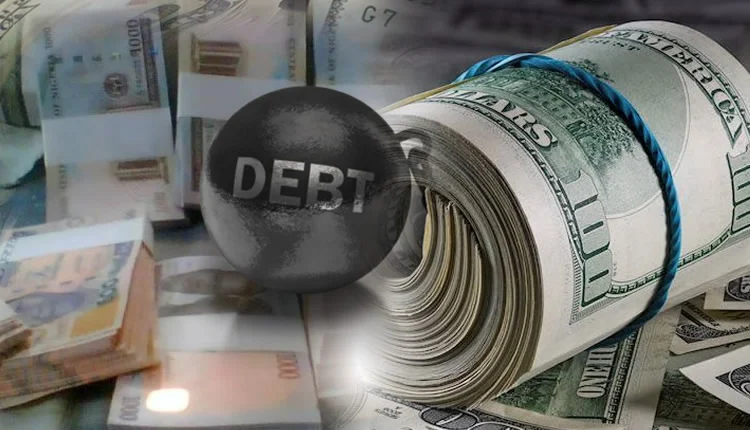
Nigeria’s Federal Government spent nearly three-quarters of its total revenue on debt servicing between January and July 2025, according to the 2026–2028 Medium-Term Expenditure Framework and Fiscal Strategy Paper. Total revenue for the period was N13.67 trillion, with N9.81 trillion allocated to domestic and external debt obligations, representing 71.8% of government income.
When personnel costs for ministries, departments, agencies, and government-owned enterprises, which totalled N4.51 trillion, are added, spending on debt service and salaries alone exceeded total revenue, amounting to 105% of available funds. The budget shortfall was largely driven by oil revenue underperformance, which reached N4.64 trillion against a prorated target of N12.25 trillion.
Non-oil revenue provided partial relief, with Company Income Tax and VAT exceeding projections. However, customs duties, Federation Account levies, and dividends from NLNG and development finance institutions underperformed, leaving a revenue gap of N10.19 trillion or 42.7% for the seven-month period.
Also Read: NIPC Says It Facilitated Over 10 Billion Dollars in Investments in 2025
Capital expenditure suffered most from the fiscal strain, with only N3.60 trillion spent out of a pro-rata budget of N13.67 trillion, a shortfall of 73.7%. Debt servicing pressures, which have consistently consumed a large share of revenue, continue to crowd out investment in key sectors such as health, education, and infrastructure.
Leave feedback about this
You must be logged in to post a comment.