

By Bunmi Yekini, Belem, Brazil
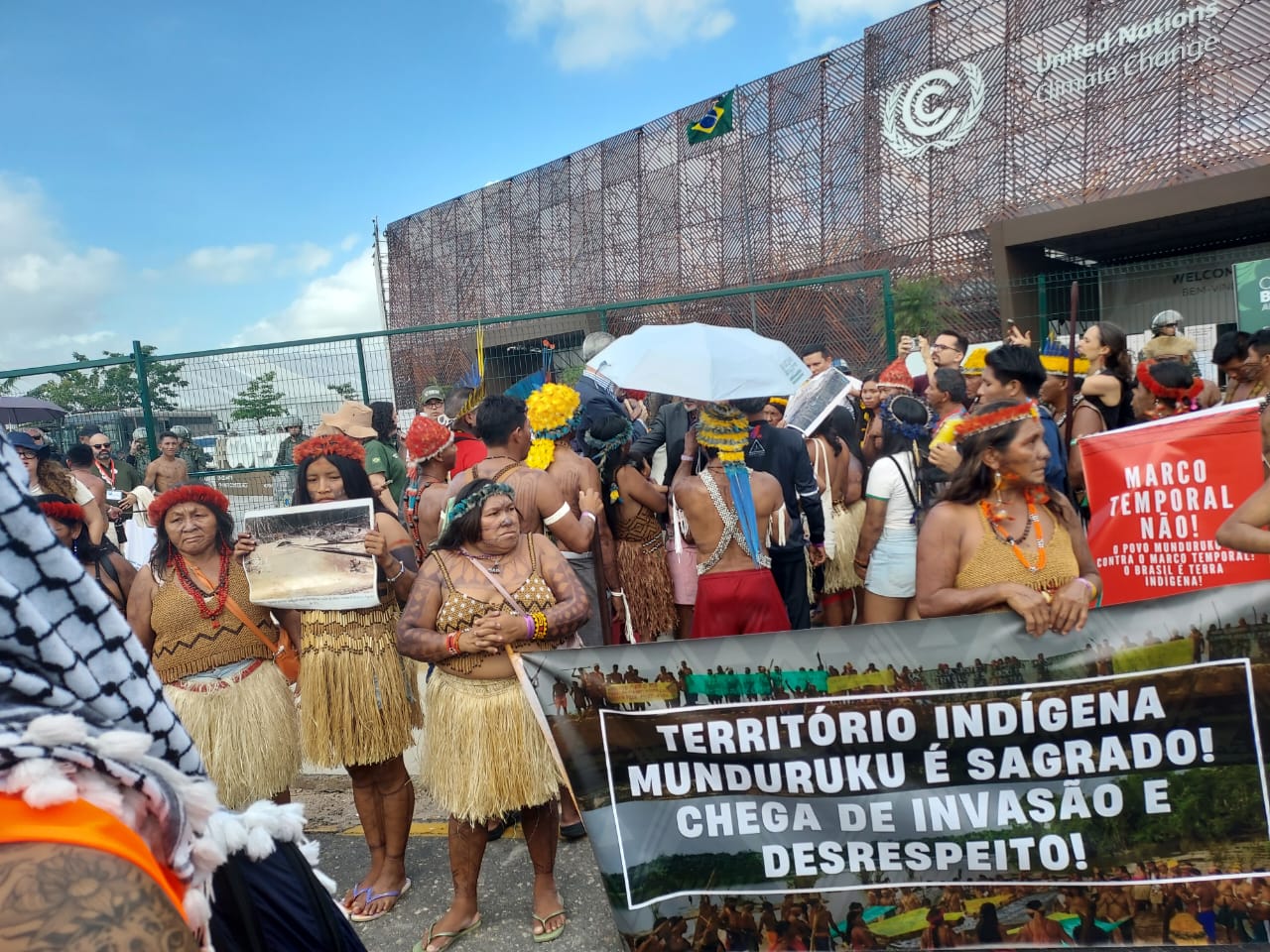
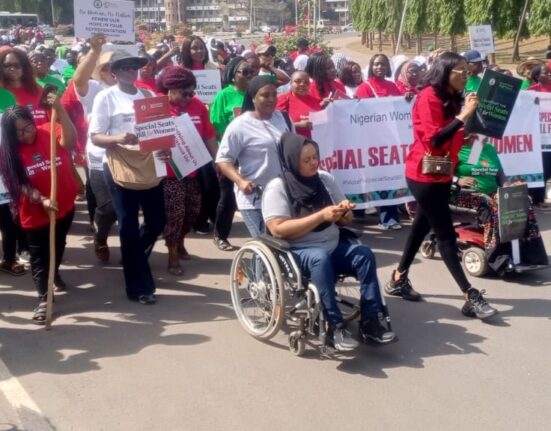
Week two of the climate summit reached a new peak of activism on Thursday as protests swept through both the streets outside the venue and the corridors inside the Blue Zone. Demonstrations have persisted since the start of the week, but tensions rose sharply as negotiators moved into the final stretch of closed-door talks.
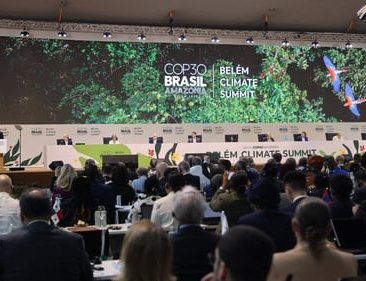
While ministers and negotiators gathered behind closed doors in one of the meeting rooms for the last days of negotiations, climate activists made their presence impossible to ignore. A standout action was led by campaigners in red jackets, carrying colourful “Just Transition Bingo” cards, urging world leaders to agree on an outcome that puts people first.
The action, organised by ActionAid and the Asian Peoples’ Movement on Debt and Development (APMDD), echoed through the venue with chants of “We want just transition and we want it now.” On the reverse side of the bingo cards, activists displayed “greenwash bingo,” a list of tactics they say are commonly used by major polluters to dodge real climate action.
Teresa Anderson, ActionAid’s Global Lead on Climate Justice, stressed the urgency of ensuring that climate policies do not harm vulnerable communities. “Women, workers and communities need the chance to shape and benefit from climate plans that might affect them,” she said.
“Just transition approaches put steps in place to protect people and their rights, so that they are not accidentally pushed into poverty from narrow carbon-counting approaches. It’s time for climate action to evolve and put people at the centre, with a milestone decision on a global mechanism for just transition at COP30.”
Also Read: Lagos to Host Global Climate Summit on Blue Economy Ahead of COP30
Lidy Nacpil, Coordinator of APMDD, said civil society has been instrumental in pushing the negotiations toward the possible creation of a Just Transition Mechanism. “COP30 is close to establishing a Just Transition Mechanism that, if decided, will be a big step towards delivering real action for the lives and livelihoods of millions, if not billions, of people,” she said. “This could not have been possible without the unity and collective action of trade unions, social movements, indigenous peoples, and civil society pushing for a Belem Action Mechanism. We continue to call for the formal representation of all affected sectors in this mechanism. There can be no just transition without peoples’ rights and representation.”
As protests continue both inside and outside the Blue Zone, pressure mounts on negotiators to deliver a people-centred outcome before the summit closes.
This story was produced as part of the 2025 Climate Change Media Partnership, a journalism fellowship organized by Internews’ Earth Journalism Network and the Stanley Center for Peace and Security.
Leave feedback about this
You must be logged in to post a comment.