

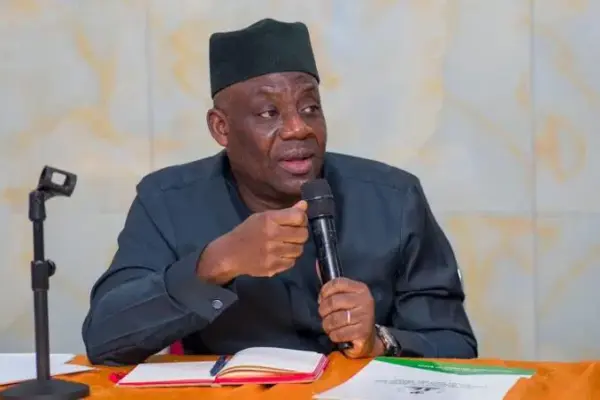
The Nigerian government has launched a new reform programme aimed at tackling the country’s out-of-school crisis and improving basic education. The initiative, known as HOPE for Quality Basic Education for All, or HOPE-EDU, is designed to strengthen learning outcomes and expand access across participating states.
The Executive Secretary of the Universal Basic Education Commission, Aisha Garba, speaking at a three-day sensitisation workshop in Uyo, Akwa Ibom State, said Nigeria faces more than 10 million out-of-school children, overcrowded classrooms and widening resource gaps. She was represented by the Deputy Executive Secretary, Technical, Rasaq Akinyemi. UNICEF estimates that 18.9 million children in Nigeria are out of school.
Under the programme, the government aims to improve learning outcomes for more than 29 million children, support 500,000 teachers, build 13,000 classrooms and return over 1.5 million children to school. The reform will focus on literacy and numeracy, particularly in rural communities, using a performance-based funding model tied to measurable results.
Also Read: Sign Bill Seeking To Make Education Free, Compulsory: Falana Asks Buhari
The Minister of Education, Tunji Alausa, said 552 million US dollars has been unlocked to accelerate the reforms. The programme is co-financed by the World Bank and the Global Partnership for Education and aligned with the Nigeria Education Sector Renewal Initiative.
Leave feedback about this
You must be logged in to post a comment.