


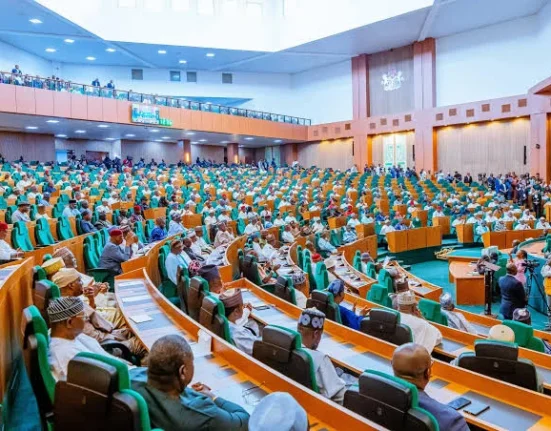
The House of Representatives has amended the Electoral Act to designate the Court of Appeal as the final authority for pre-election disputes involving national assembly and governorship contests. The amendment also empowers the court of appeal to serve as the court of first instance in pre-election matters related to presidential elections, with further appeals proceeding to the supreme court.
The bill was co-sponsored by Deputy Speaker Benjamin Kalu alongside four committee chairmen covering electoral matters, defence, ports and harbours, and police affairs. During plenary, the chairman of the electoral matters committee explained that the amendment is designed to provide clarity, certainty, and uniformity in handling disputes arising from party primaries and other pre-election processes.
Under the revised framework, pre-election cases concerning national assembly, state assembly, and governorship elections will begin at the federal high court, with appeals going directly to the court of appeal. Presidential pre-election matters will originate at the Court of Appeal. The amendment also restricts jurisdiction by specifying that only courts identified in the new provision can hear such cases, with the aim of reducing conflicting rulings and discouraging forum shopping.
Also Read: Jonathan proposes single tribunal model for election disputes
Lawmakers also introduced new requirements for candidates to submit verifiable contact details to the Independent National Electoral Commission, including addresses, email, and telephone information. The changes recognise electronic transmission as a valid method for serving legal processes, provided there is proof of delivery. The amendment is expected to speed up dispute resolution, reduce delays, and modernise Nigeria’s electoral system, but it will require approval by the Senate and presidential assent before becoming law.

Leave feedback about this
You must be logged in to post a comment.